Quick answer
For most buyers, the outdoor sauna vs indoor sauna decision comes down to site constraints more than heat preference. Choose an outdoor sauna if you have a suitable yard, deck, patio, or accessory structure, you can manage weather exposure, and you want to keep heat and moisture away from living spaces. Choose an indoor sauna if you have a stable spare room, basement, gym area, garage, or bathroom-adjacent space where electrical service, ventilation, flooring, and clearance can be handled safely. Renters and small-space buyers should also compare portable options in the Sauna Buyer Guide Tool before assuming a built-in cabin is the only path.
SaunaBoxes.com is an independent buyer education site. This guide is not a medical recommendation and does not claim that any sauna type treats disease. It is meant to help you compare practical ownership factors before you spend money.
Why this choice matters before you shop
A sauna listing can make installation look simple: select a cabin, place it somewhere attractive, plug it in or wire it, and start relaxing. Real homes are less tidy. The same sauna that fits beautifully in a product photo may be awkward if your panel lacks capacity, your ceiling is too low, your yard slopes, your climate is wet, or your landlord does not allow modifications. Placement affects upfront cost, daily use, cleaning, durability, resale flexibility, and even whether you will use the sauna consistently.
Buyers often start by comparing infrared, traditional dry, steam, or portable units. That is useful, and our broader Types of Saunas guide can help. But the outdoor-versus-indoor question should happen at the same time. Heat source and location are linked. A traditional heater in an outdoor barrel has different needs than an infrared cabin in a spare room. A steam-heavy setup creates different moisture risk than a dry infrared unit. The right answer is usually the one that fits your building conditions, not the one that looks best online.
The main differences at a glance
- Space: Outdoor saunas need exterior footprint, access paths, clearances, and a level base. Indoor saunas need ceiling height, floor protection, and safe clearance from walls, stored items, and household traffic.
- Installation: Outdoor units may need foundations, weatherproof wiring, permits, and delivery access. Indoor units may need dedicated circuits, ventilation planning, and finish protection.
- Moisture and heat management: Outdoor placement keeps most heat and humidity out of the house. Indoor placement requires more attention to vapor, condensation, and surrounding materials.
- Convenience: Indoor units are easier to use in bad weather. Outdoor units can feel more private and retreat-like but may require a cold or rainy walk.
- Maintenance: Outdoor units face rain, snow, sun, insects, ground moisture, and seasonal movement. Indoor units face dust, sweat, towel habits, and household humidity.
- Budget: Either can be affordable or expensive. The hidden costs are usually site preparation, electrical work, freight, assembly, and repairs, not just the product price.
Outdoor saunas: buyer advantages
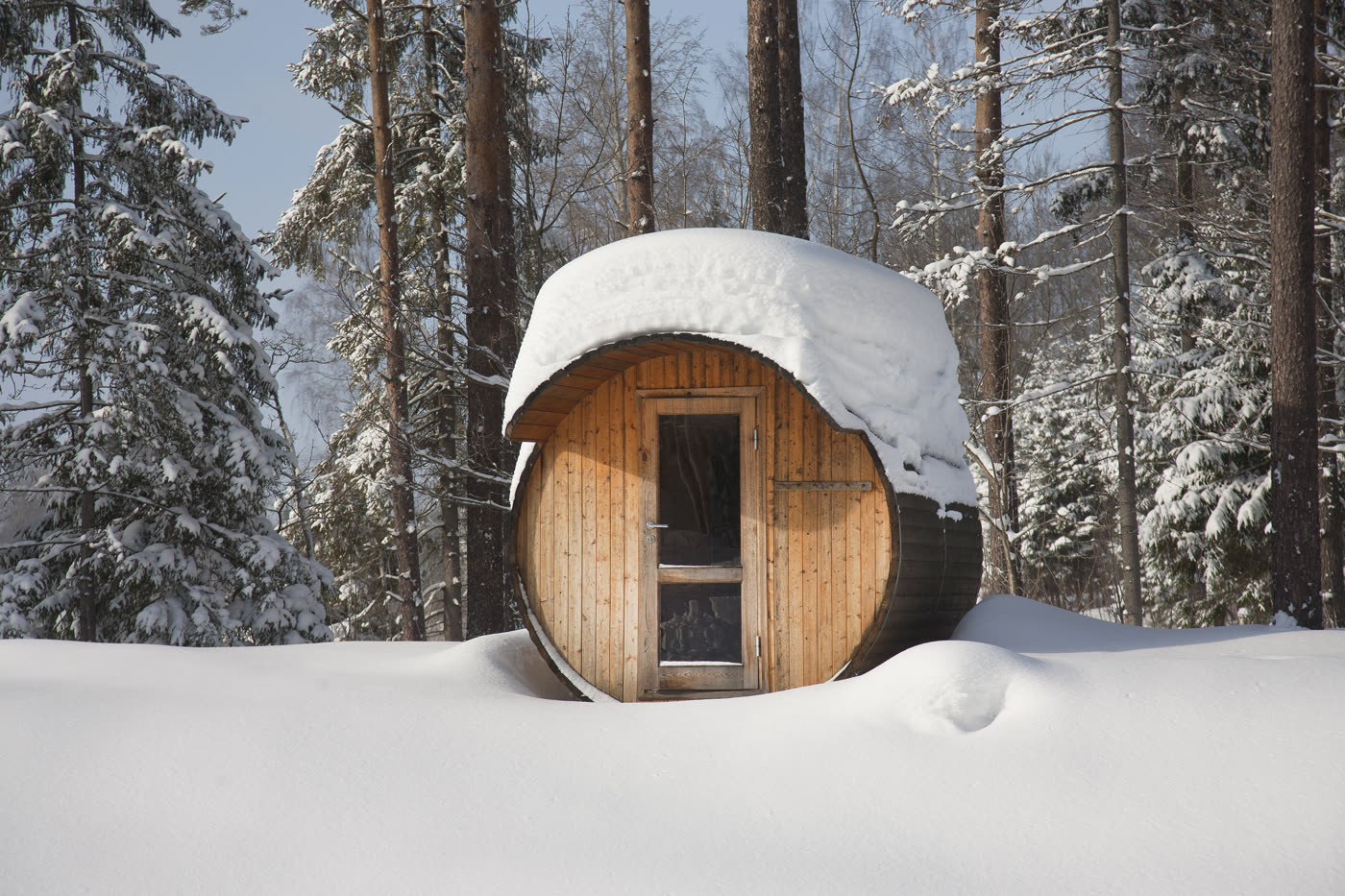
An outdoor sauna can be the right choice when you want a dedicated wellness space that does not take over the house. It separates sauna heat, wood aroma, towel traffic, and cooling routines from your living area. Many buyers like stepping outside after a session, especially if they have a patio, shower, plunge tub, or quiet seating area nearby.
Outdoor placement can also solve indoor space problems. If every spare room is already full, an exterior cabin, barrel, cube, or compact modular sauna may fit better than sacrificing a bedroom or office. For homeowners with a detached garage, garden room, or covered patio, an outdoor sauna can feel intentional rather than squeezed in.
Another advantage is moisture tolerance. Outdoor environments are not automatically safe, but they are usually less vulnerable than drywall, carpet, closets, and finished basements. A dry sauna with occasional water on rocks may still produce humidity, and a steam-oriented setup produces much more. Keeping that away from interior finishes can reduce the chance of condensation damage, provided the outdoor unit itself is designed and maintained properly.
Outdoor sauna tradeoffs and red flags
Outdoor saunas are not maintenance-free sheds. They are exposed structures with electrical and thermal demands. Before buying, ask where the unit will sit, what base it requires, how water drains around it, how the roof sheds rain or snow, and whether the door will bind if the ground moves. A sauna placed directly on uneven soil may look fine for a few months and become frustrating later.
Delivery can also surprise buyers. A large crate may require liftgate service, driveway access, multiple people, or professional assembly. If your yard has stairs, narrow gates, soft ground, or overhead branches, the lowest online price may not reflect the real delivered cost. Our guide to home sauna cost explains why freight and installation deserve a separate budget line.
Weather is another major factor. In a cold climate, an outdoor sauna may take longer to warm up and may need stronger insulation. In a humid or rainy climate, exterior wood and hardware need more attention. In hot sunny climates, UV exposure can weather finishes quickly. None of this means outdoor is wrong; it means you should compare construction, roof design, drainage, warranty exclusions, and replacement parts before you buy.
Indoor saunas: buyer advantages
An indoor sauna can be easier to use often. You do not need to cross a dark yard, shovel snow from a path, or worry about rain during your cooldown. For buyers who want short sessions after workouts, an indoor location near a bathroom, laundry area, or home gym can be very convenient. Convenience matters because a sauna you use twice a week is more valuable than a dramatic outdoor cabin you avoid in bad weather.
Indoor units may also be more predictable to heat. They are protected from wind, freezing temperatures, and direct rain. Infrared cabins in particular are commonly designed for indoor use and may be suitable for basements, spare rooms, or fitness areas when electrical and clearance requirements are met. If you are new to sauna shopping, compare infrared and other heat styles in Dry Sauna vs Wet Sauna vs Infrared.
For some buyers, indoor placement is more discreet. A backyard structure can trigger HOA questions, neighbor visibility, property setbacks, or permit research. An indoor sauna may still need electrical work and safe ventilation, but it may avoid exterior aesthetic restrictions.
Indoor sauna tradeoffs and red flags
The biggest indoor risk is treating the sauna like ordinary furniture. A sauna is a heat-producing appliance or room. It may need a dedicated circuit, specific outlet type, GFCI protection depending on location and code, clearances, ventilation, and floor protection. Always follow the manufacturer instructions and use a qualified electrician where required.
Moisture is the second concern. Dry saunas are not as wet as steam rooms, but people sweat, towels become damp, and water may be poured on rocks in traditional setups if allowed by the heater. Steam units add much more moisture. Poor planning can lead to odors, swelling trim, mildew, or damage to nearby finishes. Basements are especially tricky because they may already have humidity issues.
Noise and household flow also matter. Some heaters click, fans run, doors open and close, and users need a place for towels and cooling. If the only available indoor spot is next to a nursery, shared office wall, or cluttered storage zone, the daily experience may be less relaxing than expected.
Comparison checklist: outdoor vs indoor sauna
Use this checklist before you compare models:
- Available footprint: Measure the actual space, not the ideal space. Include door swing, seating access, heater clearance, and walking room.
- Electrical path: Identify whether the unit is plug-in or hardwired, voltage requirements, breaker size, distance from panel, and code requirements.
- Ventilation: Confirm how fresh air enters and exits, and whether the surrounding area can handle heat and humidity.
- Flooring and base: Outdoor buyers need a level, draining base. Indoor buyers need heat-tolerant, cleanable flooring.
- Moisture plan: Decide where damp towels go, how surfaces dry, and whether nearby materials can tolerate humidity.
- Delivery route: Check crate dimensions, stairs, gates, elevators, driveways, and assembly labor.
- Privacy: Think about windows, neighbors, family traffic, and clothing changes.
- Maintenance access: Make sure you can reach panels, heaters, stones, screws, vents, roof edges, and drains.
- Warranty terms: Read exclusions for outdoor exposure, improper installation, commercial use, electrical work, and water damage.
Pros and cons of outdoor saunas
Pros
- Keeps most sauna heat, sweat, and humidity outside living spaces.
- Can create a dedicated retreat with cooling space nearby.
- May work when the home has no spare indoor room.
- Often pairs well with patios, decks, pools, cold plunges, or garden paths.
- Can add lifestyle appeal for some homeowners.
Cons
- Requires weather planning, drainage, and exterior maintenance.
- May need a foundation, slab, deck reinforcement, or gravel pad.
- Delivery and assembly can be harder than expected.
- Electrical work may cost more because of distance and outdoor-rated materials.
- Use may drop during storms, icy paths, or inconvenient seasons.
Pros and cons of indoor saunas
Pros
- Convenient in all weather and often easier to use consistently.
- Protected from rain, snow, UV exposure, and wind.
- Can fit near a bathroom, gym, laundry room, or recovery area.
- May have fewer exterior permitting or HOA concerns.
- Smaller infrared or portable units can work for compact homes.
Cons
- Heat and moisture must be managed inside the home.
- Requires careful clearance, flooring, and ventilation planning.
- Can take up valuable living, storage, or workout space.
- Steam-oriented setups can create higher humidity risk.
- Some homes need electrical upgrades before installation.
Which buyers are best suited to each option?
Choose an outdoor sauna if you own your home, have a stable exterior location, and are comfortable maintaining a small structure. Outdoor is also attractive if you value the ritual of leaving the house, cooling in fresh air, and keeping sauna traffic separate from daily living.
Choose an indoor sauna if convenience is your highest priority, you have a suitable room, and you can manage electrical and moisture requirements. Indoor is often better for buyers who want quick evening sessions, post-workout use, or year-round access without weather friction.
Choose a portable sauna if you rent, move often, or are still testing whether sauna use fits your routine. Portable units are not the same as built-in cabins, but they can reduce commitment. See Portable Saunas for Renters for a more specific comparison.
Buyer questions to ask before purchase
Before paying a deposit, ask the seller or manufacturer these questions:
- Is the model rated for indoor use, outdoor use, or both?
- What exact electrical requirements apply, and is professional installation required?
- What base or flooring is recommended?
- What ventilation clearances are required?
- What parts are covered under warranty, and what voids coverage?
- Are freight damage claims handled by the seller, carrier, or buyer?
- Can replacement heaters, controllers, stones, benches, seals, and panels be purchased later?
- What routine maintenance is expected in my climate?
If a listing makes strong health claims but provides weak installation details, treat that as a warning sign. A good buying decision depends on fit, safety, and serviceability, not just wellness language.
FAQ
Is an outdoor sauna cheaper than an indoor sauna?
Not always. Outdoor saunas can have higher site preparation, freight, weatherproofing, and electrical costs. Indoor saunas can become expensive if you need electrical upgrades, ventilation changes, or room renovation. Compare total installed cost, not product price alone.
Can I put an indoor sauna in a garage?
Sometimes, but garages vary widely. Consider temperature swings, dust, stored chemicals, vehicle fumes, electrical capacity, floor slope, ventilation, and local code. Follow the sauna manufacturer instructions and consult qualified trades when wiring is involved.
Do outdoor saunas need permits?
They may. Requirements depend on size, electrical work, foundation type, setbacks, HOA rules, and local regulations. Check before ordering because permit delays can affect delivery and installation.
Which is easier to maintain?
Indoor saunas avoid exterior weathering, but they still need cleaning and moisture control. Outdoor saunas need both interior cleaning and exterior inspection. The easier choice depends on climate, construction, and how often you use it. See the Sauna Maintenance Cleaning Guide for more detail.
Is one option healthier than the other?
Location alone does not make a sauna healthier. Heat tolerance, session length, hydration, medical conditions, medications, and safe operation matter more. Read Sauna Benefits and Risks and talk with a healthcare professional if you have concerns.
Disclaimer
This article is general buyer education, not medical, electrical, legal, or building-code advice. Sauna use may not be appropriate for everyone, especially people who are pregnant, have cardiovascular conditions, have heat sensitivity, take medications that affect sweating or blood pressure, or have been advised to avoid heat exposure. Consult a qualified healthcare professional about personal health questions, and consult licensed trades or local officials for electrical, structural, and permitting questions.