Quick answer
The best outdoor sauna is the one your yard, climate, budget, and installation plan can realistically support. Barrel saunas are popular because they look good, shed water well, and can be simpler to place than a full cabin. Cabin-style outdoor saunas usually feel roomier and may be more comfortable for stretching, lying down, or using two bench levels. Outdoor infrared saunas can be convenient, but you need to verify weather rating, electrical requirements, warranty language, and where the panels and controls can safely live.
If you are still comparing indoor and outdoor placement, start with our outdoor sauna vs indoor sauna guide. This page focuses on how to choose an outdoor setup without getting surprised by delivery, power, foundation, weather, or return-policy issues.
If the rounded backyard style is your main interest, compare the separate best barrel saunas checklist before choosing a kit.
SaunaBoxes.com is an independent buyer education site. We do not provide medical advice, electrical advice, installation services, or manufacturer customer support. For hardwired equipment, permits, and heater placement, use a qualified local professional.
Quick picks by buyer type
- Best for small backyards: a compact barrel sauna or small outdoor cabin with a clearly documented footprint, door swing, and service-clearance needs.
- Best for comfort: a cabin-style outdoor sauna with enough bench depth, shoulder room, and ceiling height for the way you actually plan to sit or lie down.
- Best for classic sauna feel: a traditional outdoor dry sauna with a properly sized heater, stones, ventilation, and safe clearances.
- Best for visual appeal: a barrel sauna, especially if the curved profile fits your yard design and the bench layout is comfortable for your body size.
- Best for cold or wet climates: a model with strong weather detailing, drainage planning, insulation details, roof or cover strategy, and warranty language that explicitly supports your placement.
- Best if you hate project management: a package with local installation help, documented electrical requirements, freight coordination, and a clear damaged-shipment process.
Outdoor sauna comparison table
| Outdoor sauna type | Best fit | Watch-outs |
|---|---|---|
| Barrel sauna | Backyards, patios, visual curb appeal, buyers wanting a classic outdoor look. | Bench shape, headroom, heat stratification, door seal, roof/cover needs, foundation levelness. |
| Cabin-style outdoor sauna | Buyers who want more room, better bench options, and a more room-like sauna feel. | Higher cost, heavier delivery, more site prep, more serious electrical and foundation planning. |
| Outdoor infrared sauna | Lower-temperature infrared buyers who have a protected outdoor location and verified weather suitability. | Weather rating, electronics exposure, warranty exclusions, EMF/claim language, power needs. |
| Wood-fired outdoor sauna | Rural or spacious properties where smoke, wood storage, and local rules are manageable. | Fire safety, chimney/clearance rules, fuel storage, insurance, local code, longer heat-up routine. |
| Outdoor sauna kit | DIY-capable buyers who can follow plans and coordinate power, base, and delivery. | Missing tools, unclear instructions, freight damage, parts delays, warranty limits if installed incorrectly. |
Barrel vs cabin vs outdoor infrared
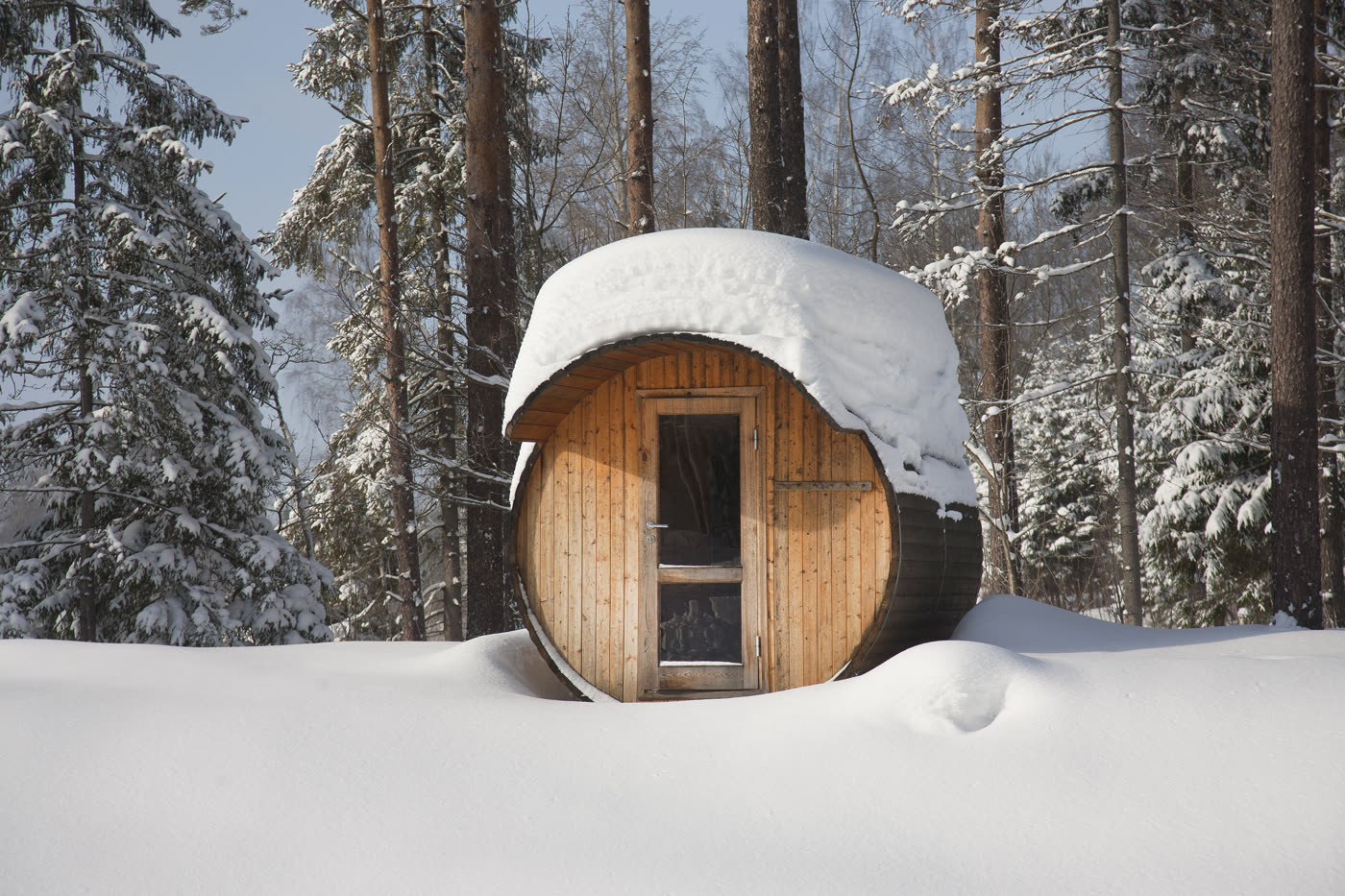
A barrel sauna is often the first outdoor sauna people picture: a rounded wood structure, a compact footprint, and a strong backyard-wellness look. The curved shape can shed rain and snow, but it can also create practical comfort tradeoffs. Before buying, check whether the benches are wide enough, whether tall users can sit naturally, whether the heater size matches the room volume, and whether the model needs a roof kit, cover, or extra weather protection in your climate.
A cabin-style outdoor sauna usually feels more like a dedicated room. That can mean better bench depth, easier movement, and a more familiar layout. The tradeoff is cost and complexity. Cabin units can be heavier, harder to deliver, and less forgiving if your base is not level. If you want a premium setup, this category is worth comparing, but do not treat the product price as the total project cost.
Outdoor infrared saunas require extra verification because infrared cabins rely on panels, wiring, controls, and electronics. Some are designed for indoor use only. If a listing suggests outdoor use, confirm the exact weather rating, whether the sauna needs to sit under a roof or covered patio, what humidity or temperature exposure voids the warranty, and whether the electrical setup is acceptable for your location.
Placement, foundation, and delivery checks
Before you compare finishes or accessories, map the actual path from the delivery truck to the final sauna location. Many problems start with assumptions: a gate is too narrow, stairs are too steep, the yard is not level, a deck is not rated for the weight, or the unit arrives curbside when the buyer expected backyard placement.
- Measure gates, walkways, turns, stairs, slopes, and overhead obstructions.
- Confirm whether the freight company delivers curbside, driveway, garage, or final placement.
- Ask what happens if parts arrive damaged or missing.
- Confirm the required base: concrete pad, pavers, crushed stone, deck, sleepers, or manufacturer-specific platform.
- Keep drainage in mind. A beautiful low spot in the yard may become a maintenance problem after heavy rain.
For budget planning, also read home sauna costs and hidden expenses.
Power, heater, and electrical questions
Outdoor sauna listings often make the heater sound like a simple add-on. Treat it as a core part of the purchase. You need to know whether the heater is included, whether it is electric or wood-fired, what voltage and amperage it requires, whether a dedicated circuit is needed, and whether the installation must be hardwired by a licensed electrician. If the heater is optional, compare the final package price rather than the lowest advertised cabin price.
Do not guess on electrical work. Ask for the installation manual before purchase and show it to a qualified electrician if the product is hardwired or outside your experience. If you are choosing between dry, wet, infrared, and steam-style heat, use our dry sauna vs wet sauna vs infrared explainer to understand the category differences.
Weatherproofing and maintenance
An outdoor sauna lives through sun, rain, wind, snow, freeze-thaw cycles, insects, landscaping debris, and seasonal humidity. Ask what wood is used, how it should be treated, whether the manufacturer recommends a roof kit or cover, how often exterior maintenance is expected, and what weather exposure voids the warranty. A model that looks affordable can become expensive if it needs frequent sealing, replacement parts, or a custom cover to survive your climate.
Ventilation and drying matter too. Sauna use creates heat and moisture even in dry-sauna formats. The easier the unit is to air out, clean, and inspect, the more likely you are to maintain it properly.
Warranty and return-policy red flags
Outdoor saunas are bulky products, so return terms can matter as much as headline price. Read the policy before ordering, not after delivery. Watch for restocking fees, return-freight responsibility, short inspection windows, exclusions for installed products, unclear damaged-shipment rules, and warranty language that excludes weather, improper foundation, improper wiring, or outdoor exposure.
Use our home sauna warranty and return policy checklist before buying any expensive outdoor model.
FAQ
Are outdoor saunas worth it?
They can be worth it for homeowners who have suitable space, safe power access, and realistic maintenance expectations. They are less attractive if your yard is hard to access, your budget does not include installation and site prep, or your climate creates warranty concerns.
Do outdoor saunas need electricity?
Many outdoor saunas use electric heaters and need a dedicated electrical setup. Some use wood-fired heaters instead. Always verify the exact heater, voltage, amperage, wiring, clearances, and local requirements before ordering.
What is the best foundation for an outdoor sauna?
The best foundation depends on the model and site. Common options include concrete pads, pavers, compacted gravel, treated sleepers, or deck placement when the structure can support the load. Follow the manufacturer instructions and local building guidance.
Is a barrel sauna better than a cabin sauna?
Not automatically. Barrel saunas can be attractive and compact, but cabin saunas often feel roomier and more flexible. Compare bench comfort, headroom, heater performance, insulation, weather protection, and total installed cost.
How much does an outdoor sauna cost?
Outdoor sauna projects can range from a few thousand dollars to well over ten thousand dollars depending on size, heater, wood, freight, foundation, electrical work, accessories, and installation help. Compare total project cost, not just the sauna kit price.
Can an outdoor sauna stay outside in winter?
Some outdoor saunas are designed for year-round outdoor placement, but details matter. Check insulation, roof or cover recommendations, wood care, drainage, heater sizing, controls, and warranty language for your climate.