Quick answer
The best portable sauna for renters is usually the option that fits your lease, electrical access, storage space, flooring, ventilation, and cleanup tolerance without permanent changes. Portable sauna boxes and tents can offer a seated heat experience with a smaller footprint. Sauna blankets are compact and easy to store but feel different from a cabin. Small infrared cabins may work for some renters, but only if the landlord allows them, the electrical requirements are compatible, and delivery is realistic. Before buying, assume you may need to move the sauna later and choose accordingly.
SaunaBoxes.com is an independent buyer education site. This article does not provide medical advice, does not make disease-treatment claims, and does not impersonate brands or publish fake reviews. It is a practical guide for renters who want to compare options cautiously.
Why renters need a different sauna checklist
Homeowners can sometimes solve sauna problems with contractors: add wiring, build a pad, modify a room, install ventilation, or create a dedicated home gym. Renters usually cannot. Your lease may restrict appliances, modifications, moisture, outdoor storage, balcony use, or heavy equipment. Even if the lease is silent, you still need to avoid damage, nuisance, and safety issues.
A renter-friendly sauna should be removable, cleanable, storable, and compatible with ordinary living spaces. It should not require cutting walls, hardwiring circuits, venting through windows in a risky way, saturating carpets, or leaving permanent marks. It should also be realistic for your building. A fourth-floor walk-up apartment is not the place to discover that a heavy cabin is delivered only to the curb.
If you are at the beginning of your research, use the Sauna Buyer Guide Tool and compare categories in Types of Saunas.
Renter-friendly sauna options
Portable sauna box
A portable sauna box is typically a compact enclosure designed for seated use. Some models use steam, some use infrared or other electric heat, and some are closer to tent-style systems. The appeal is that you can create a more upright sauna experience without a permanent build. Many fold or disassemble for storage.
For renters, the key questions are: where will it sit, how will it dry, what outlet does it require, how hot do exterior surfaces get, and how much water or condensation is involved? A portable box can be a good middle ground between a blanket and a cabin, but only if the setup and takedown fit your routine.
See the Portable Sauna Box Buying Guide for a deeper checklist.
Sauna tent
A sauna tent is often lightweight and relatively affordable. Steam tents are common, although some tent-like products use dry heat. The renter advantage is portability. The drawback is moisture management. Steam can condense on fabric, windows, floors, and nearby surfaces. If you fold a tent before it dries, odor and mildew risk increase.
A sauna tent can work well on washable flooring with good airflow and careful drying. It is less ideal on carpet, in closets, or in rooms with poor ventilation. If your apartment already has humidity problems, be cautious.
Sauna blanket
A sauna blanket is one of the easiest options to store. You lie inside a heated wrap rather than sitting in a room. It may be a good fit for renters with limited space, but the experience is not the same as a traditional sauna. Your head usually remains outside, movement is limited, and cleaning depends on liners, sweat towels, and wipeable surfaces.
Do not fall asleep in a sauna blanket. Follow temperature and timing instructions. Avoid folding heated elements incorrectly, and let the blanket cool before storage. Compare this category with upright portable products in Sauna Blanket vs Portable Sauna Box.
Compact infrared cabin
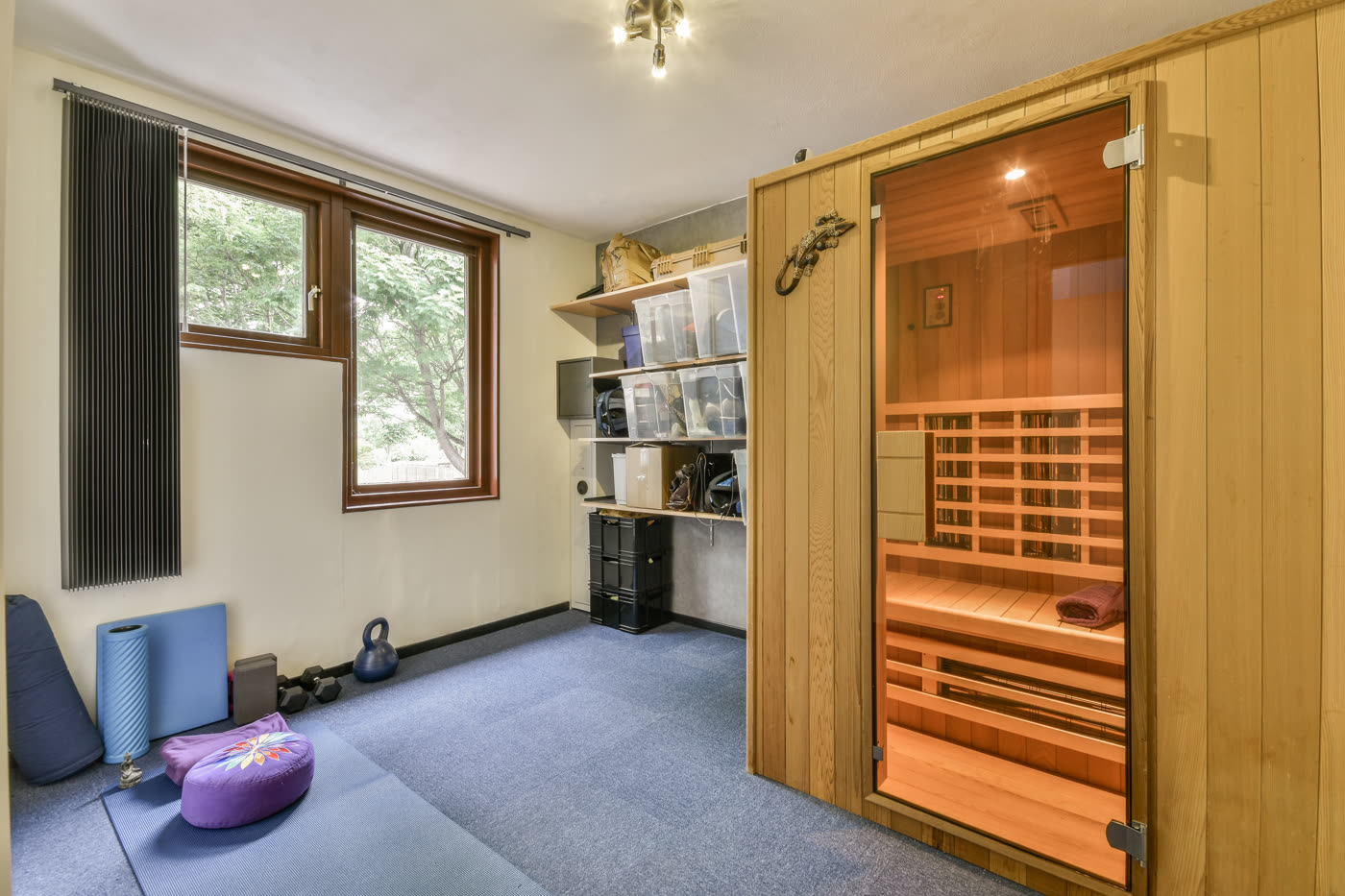
Some renters consider a one-person infrared cabin because it feels more like a real room and may plug into a household outlet depending on the model. This can work in larger rentals, but it is less portable than it looks. You need delivery access, assembly space, landlord approval, floor protection, and a plan for moving out. You also need to verify electrical requirements, not assume compatibility.
A compact cabin can be a good choice for renters with long leases, ground-floor access, spare rooms, and cooperative landlords. It is a poor choice if you move often, live in a small apartment, or cannot handle freight and assembly.
Lease and landlord considerations
Before buying, review your lease for rules about appliances, heaters, electrical loads, water use, balconies, patios, storage, modifications, and nuisance. If you are unsure, ask your landlord or property manager in writing. Keep the question practical: you are considering a portable heat appliance, you will not modify wiring or walls, you will protect flooring, and you want to confirm whether it is allowed.
Do not hide a sauna that violates your lease. Damage, odors, electrical problems, or neighbor complaints can cost more than the product. Also be careful with balconies. Many leases and building rules restrict appliances or structures on balconies, and outdoor electrical exposure can create additional hazards.
Electrical planning for renters
Many portable products advertise plug-in convenience. That does not mean every outlet is appropriate. Check voltage, amperage, wattage, grounding, cord instructions, extension cord restrictions, and whether the circuit is shared with other high-load appliances. Space heaters, hair dryers, microwaves, portable AC units, and saunas can draw significant power. Overloaded circuits are unsafe.
Avoid running cords under rugs, through doorways, or where they can be pinched. Do not use damaged cords. If the manual prohibits extension cords, follow it. If a product requires dedicated wiring, it is probably not renter-friendly unless your landlord approves professional work.
Moisture, flooring, and ventilation
Moisture is the main reason a portable sauna can become renter-unfriendly. Steam tents and some portable boxes produce condensation. Sweat can drip onto floors. Damp towels can pile up. Carpets can hold moisture and odor. Small bathrooms may already be humid.
Choose a setup location with cleanable flooring if possible: tile, sealed vinyl, concrete, or a protected surface. Use mats or trays if allowed by the product design. Ventilate the room after use. Remove wet towels immediately. Let fabric parts dry completely before storage. If condensation appears on windows or walls, your room may not be ventilating enough.
For ongoing care, follow the Sauna Maintenance Cleaning Guide.
Comparison: portable renter options
- Smallest storage footprint: Sauna blanket.
- Most upright seated feel: Portable sauna box or tent.
- Most cabin-like feel: Compact infrared cabin.
- Lowest remodeling requirement: Blanket, tent, or foldable box.
- Highest moisture concern: Steam tent or steam portable box.
- Lowest moisture concern: Many dry infrared blankets or cabins, though sweat still matters.
- Hardest to move: Compact cabin.
- Most dependent on drying routine: Steam tent and fabric portable units.
- Most likely to need landlord discussion: Compact cabin, balcony setup, or any high-power appliance.
Pros and cons of portable saunas for renters
Pros
- No permanent remodel when chosen correctly.
- Lower upfront commitment than a built-in sauna.
- Easier to move, sell, or store.
- Useful for testing whether sauna use fits your routine.
- Can fit apartments, condos, spare rooms, and multipurpose spaces.
- Often avoids permits and major construction.
Cons
- Smaller and less immersive than a traditional sauna room.
- Setup, takedown, drying, and cleaning can reduce convenience.
- Steam models can create moisture concerns.
- Some products may feel cramped for taller or larger users.
- Durability and replacement parts vary by brand and design.
- Lease restrictions may still apply.
Buyer checklist before you order
Use this checklist before clicking buy:
- I have read my lease and confirmed the product is allowed or asked for permission.
- I know the product dimensions when open and when stored.
- I measured the setup area, door swing, chair space, and exit path.
- I verified electrical requirements and circuit capacity.
- I understand whether extension cords are prohibited.
- I have a cleanable floor or protective mat plan.
- I know how the product dries after use.
- I have a towel and laundry plan.
- I can lift, assemble, fold, or move the product safely.
- I checked return shipping terms and restocking fees.
- I confirmed replacement parts are available.
- I reviewed safety warnings for heat exposure, burns, hydration, and medications.
If several answers are unknown, pause. Unknowns become expenses later.
Red flags in renter-focused sauna listings
Be cautious when a listing says “no setup needed” but the product has a water reservoir, hoses, frame, mat, and drying requirements. Be cautious when photos show carpet use but the manual warns about moisture. Be cautious when weight, electrical draw, return freight, and warranty exclusions are hard to find.
Also be skeptical of extreme health claims. A portable sauna should be judged on safety, usability, cleaning, documentation, and support. Claims about detox, rapid fat loss, or disease treatment should not be the reason you buy. Read Home Sauna Buyer Beware for broader red flags.
Where to place a portable sauna in a rental
The best location is usually a ventilated room with cleanable flooring, enough space to enter and exit, and a suitable outlet. Bathrooms may seem obvious, but they can be small, humid, and outlet-limited. Bedrooms offer space but may have carpet and poor moisture tolerance. Living rooms can work if you protect flooring and maintain privacy. Garages in rental homes may work if clean, safe, and permitted, but temperature swings and stored chemicals deserve attention.
Avoid blocking exits, covering vents, placing heat near curtains, using unstable chairs, or setting up where children or pets can interfere. If you use a seated tent or box, choose a stable chair that matches the product instructions.
Budgeting as a renter
Renter budgets should include more than product price. Add floor protection, towels, liners, cleaning supplies, storage bins, laundry costs, possible utility increases, and return shipping risk. If you move often, consider the cost and hassle of disassembly, packing, and transport. A bargain cabin that is difficult to move may be less renter-friendly than a more modest foldable product.
For a full cost framework, see How Much Does a Home Sauna Really Cost?.
FAQ
Can renters have a sauna in an apartment?
Sometimes, but it depends on the lease, product type, electrical requirements, moisture, floor protection, and building rules. Portable does not automatically mean allowed.
What is the easiest sauna to move?
Sauna blankets and foldable tents are usually easiest to move. Compact cabins are much harder because of weight, panels, freight, and assembly.
Are steam tents safe for apartments?
They can be used safely only if the product is well designed, instructions are followed, moisture is controlled, and the lease allows it. Poor ventilation or carpeted rooms can create problems.
Do portable saunas use a lot of electricity?
Usage varies by wattage, session length, warm-up time, and frequency. Check the product label and your utility rate. Avoid overloading shared circuits.
Should I ask my landlord before buying?
If the lease is unclear or the product is large, high-power, moisture-producing, or planned for a balcony or shared area, yes. Written approval can prevent disputes.
Disclaimer
This article is general buyer education, not legal, medical, electrical, or building advice. Review your lease and local rules, follow manufacturer instructions, and consult qualified professionals when needed. Sauna use may not be appropriate for everyone, especially people who are pregnant, have cardiovascular conditions, heat sensitivity, dehydration risk, or take medications affecting sweating, blood pressure, circulation, or alertness. Ask a healthcare professional about personal health concerns.