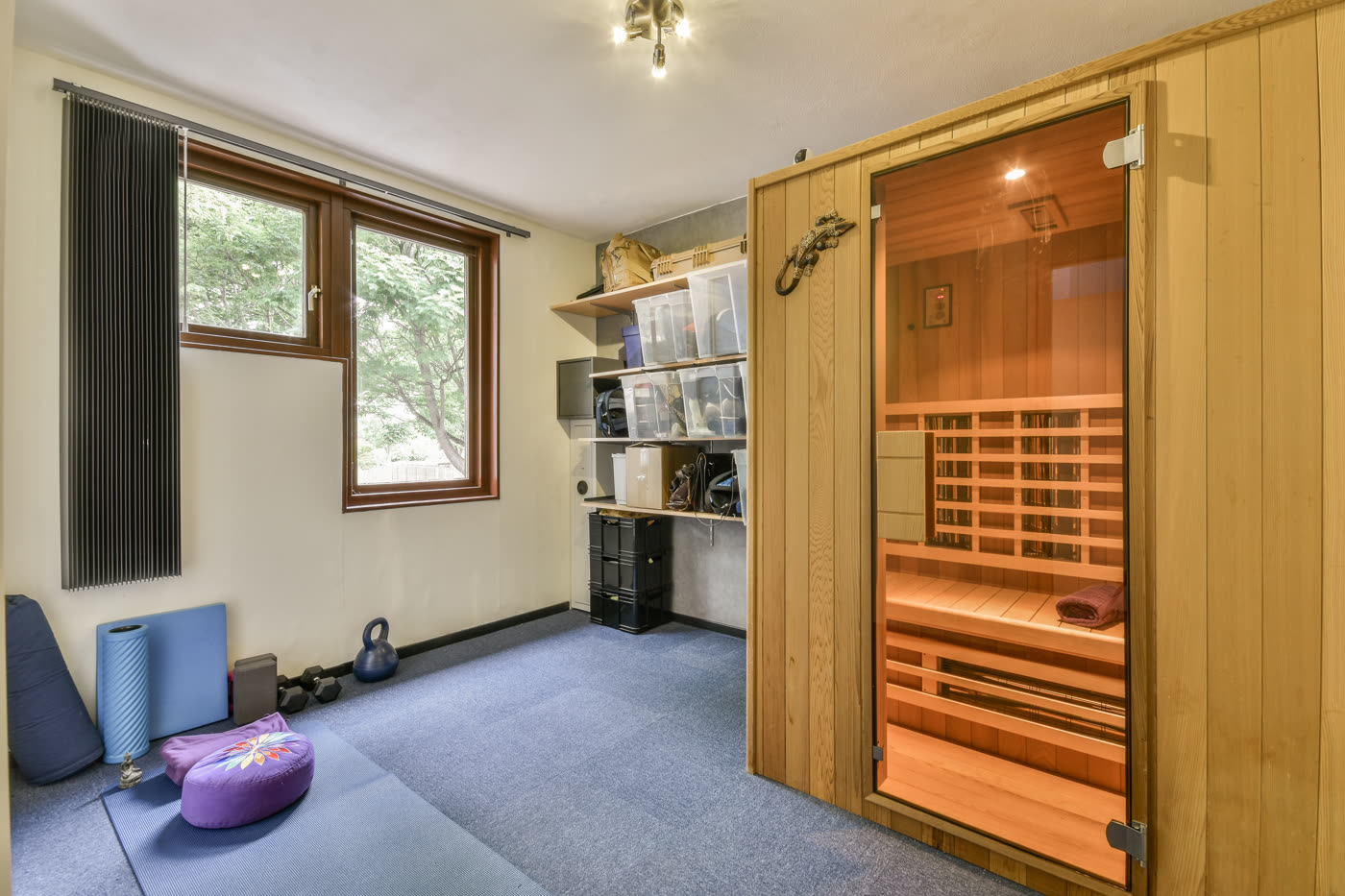
Quick answer
A good home gym sauna plan starts with space, power, ventilation, flooring, heat type, and realistic use. Choose a sauna that fits the room without blocking movement, matches your electrical capacity, can be cleaned after sweaty workouts, and has a warranty you understand. For most buyers, the best sauna is not the most extreme heat product. It is the one that safely fits the home gym, supports a repeatable routine, and does not create moisture, wiring, or return-policy surprises.
This independent guide is written for buyers planning a workout or recovery space. It does not recommend a specific brand or make health promises. If you are earlier in the buying process, compare general sauna categories in the portable sauna box buying guide before choosing a model for your gym.
Start with the room, not the sauna
Many buyers start by shopping for the biggest sauna they can afford. In a home gym, that can be a mistake. Exercise rooms already need open floor area, safe walking paths, equipment clearance, storage, mirrors, mats, and sometimes wall-mounted racks or bikes. A sauna that technically fits may still make the room awkward or unsafe.
Measure the room and draw a simple plan. Include doors, closets, windows, outlets, vents, ceiling height, equipment footprints, and the path you use when carrying weights or moving around after exercise. Then add the sauna footprint plus the clearance the manufacturer requires around the unit. Do not assume you can push a sauna tight against a wall unless the manual allows it.
You also need delivery and assembly clearance. A two-person cabin may require wide doorways, a stair turn, or space to lay panels on the floor during assembly. If the gym is in a basement or upper floor, check whether heavy boxes can be moved safely. Freight delivery often stops at the curb or driveway, which matters if you are buying a large cabin.
Decide what “recovery use” means for you
A sauna in a home gym can mean different things. Some people want a short cool-down ritual after strength training. Others want a quiet evening heat session unrelated to workouts. Some want a compact unit for occasional use, while others want a dedicated cabin that becomes part of the room’s design.
Your intended use affects the right heat type and size. If you only want occasional solo sessions, a one-person infrared cabin or portable box may be enough. If two adults will use the sauna together, a two-person model can be more comfortable, but it costs more, takes more space, and may have greater power requirements. Review the size tradeoffs in one-person vs two-person sauna before upgrading.
Be cautious with recovery claims. Heat may feel relaxing and may help some people build a consistent post-workout routine, but a home sauna should not be marketed as a cure for soreness, injury, inflammation, or medical conditions. If you have a medical condition, take medications, are pregnant, or have heat sensitivity, ask a qualified healthcare professional before using a sauna.
Compare heat types for a home gym
Infrared cabin
Infrared cabins are common in home gyms because many models are designed for indoor use and do not intentionally produce wet steam. They usually use panels or heaters that warm body-facing surfaces and cabin air. Buyers like them because they can feel comfortable at lower air temperatures than some traditional dry saunas.
The main cautions are marketing claims and electrical details. Review claims about EMF, detox, weight loss, and full spectrum carefully. The guide to infrared sauna claims explains what to ask before paying for those features.
Traditional dry sauna
A traditional dry sauna can create a more classic hot-room experience. It may require higher temperatures, stronger electrical planning, more clearance, and careful material selection. Some units allow water over stones, but buyers should confirm exactly what moisture level is permitted and what ventilation is required.
Dry saunas can work well in a dedicated gym room, but they may be less practical in a small apartment gym or multipurpose office.
Steam sauna or steam tent
Steam can feel enveloping, but moisture planning is critical. A steam setup in a home gym can add humidity to a room that already has sweat, mats, towels, and equipment. Without proper ventilation and cleaning, moisture can become a maintenance problem. If you are considering steam, read steam sauna at home pros and cons before buying.
Portable sauna box or tent
Portable boxes and tents can be useful when the gym is temporary, rented, or small. They are easier to store than a fixed cabin and may cost less. The tradeoff is comfort, durability, setup time, and cleaning. They may also leave your head outside the heated enclosure, depending on the design.
Sauna blanket
A sauna blanket is compact and easy to store, but it is not the same experience as sitting in a cabin. It can be harder to use immediately after exercise if you are sweaty, and cleaning the interior surface matters. Compare details in sauna blanket vs portable sauna.
Home gym sauna comparison
- Best for dedicated space: infrared or dry cabin.
- Best for renters: portable sauna box, tent, or blanket.
- Best for shared use: two-person cabin, if space and power allow.
- Best for low moisture: infrared cabin or dry sauna used according to instructions.
- Highest moisture planning: steam sauna or steam tent.
- Easiest storage: blanket, then foldable tent or portable box.
- Most assembly planning: cabin sauna.
Ventilation and air quality planning
Ventilation is not optional. Even a low-moisture sauna adds heat to the room, and a home gym can already feel warm after exercise. Check whether the sauna itself has vents and whether the room has enough air exchange. You do not necessarily need a commercial ventilation system for every compact sauna, but you should avoid trapping heat and stale air in a closed room.
If the gym is in a basement, garage, or interior room without windows, be more cautious. Heat buildup can make sessions uncomfortable and can stress nearby materials. If the sauna is steam-based, humidity control becomes even more important. Consider a hygrometer, bathroom-style exhaust fan where appropriate, dehumidifier, or a different sauna type if the space cannot handle moisture.
Also think about odors. Workout rooms contain shoes, mats, towels, and sweat. A sauna with wood benches or fabric components can hold smells if it is not cleaned and aired out. Choose materials and cleaning routines that match your real habits, not your best-case habits.
Flooring and surrounding materials
Home gym floors are often rubber, foam, vinyl, concrete, carpet, or engineered wood. Not every floor is ideal under a sauna. Heat, moisture, and weight can affect surfaces differently. Check the manufacturer’s required base and avoid placing hot equipment on soft foam tiles unless the manual allows it.
Rubber gym flooring can have odors when warm. Carpet can collect sweat and humidity. Concrete is durable but may feel cold and can transmit moisture in basements. If you use mats around the sauna, choose surfaces that are easy to wipe and dry. Keep towels and water bottles nearby, but avoid creating a cluttered trip hazard around the sauna door.
Electrical and placement checklist
Before ordering, confirm these items:
- Voltage and amperage requirements.
- Whether a dedicated circuit is required.
- Whether the plug type matches your outlet.
- Whether extension cords are prohibited.
- Clearance from walls, furniture, curtains, storage bins, and gym equipment.
- Maximum surface temperature warnings.
- Whether the unit can be used in a garage, basement, or non-climate-controlled room.
- Whether the model is indoor-only or outdoor-rated.
- Whether assembly requires two people.
- Whether the sauna can be disassembled if you move.
If you discover electrical work is needed, include it in the budget before buying. Product price alone is not the full cost. The home sauna cost guide can help you identify hidden expenses.
Budget planning beyond the sticker price
A home gym sauna budget should include the unit, freight, delivery upgrades, assembly help, electrical work, flooring protection, ventilation improvements, cleaning supplies, towels, timers, thermometers, and possible accessories. If you buy a cabin, also consider replacement heaters, control panels, glass, hinges, and benches.
Return costs can be significant. A large sauna may ship freight, and returning it may involve restocking fees, repackaging requirements, and expensive freight charges. Before purchase, read the seller’s policies using the home sauna warranty and return policy checklist.
Pros and cons of adding a sauna to a home gym
Pros
- Creates a dedicated recovery or relaxation ritual.
- Keeps heat sessions near showers, towels, and workout gear if the layout is planned well.
- Can increase the perceived value and completeness of a home wellness space.
- May encourage consistent cooldown time instead of rushing away after workouts.
- Offers privacy compared with a shared gym or spa sauna.
Cons
- Takes floor space away from exercise equipment.
- Can require electrical upgrades or ventilation improvements.
- Adds cleaning and maintenance tasks.
- May create heat or humidity issues in small rooms.
- Warranty and return terms can be costly if the product is a poor fit.
Home gym sauna planning checklist
Use this checklist as a final review:
- I measured the gym and mapped the sauna footprint.
- I confirmed doorways, stairs, and delivery access.
- I selected a heat type that fits the room’s ventilation and moisture limits.
- I confirmed electrical requirements with the manual.
- I checked floor compatibility and weight.
- I planned towel storage, cleaning supplies, and drying time.
- I read the warranty and return policy.
- I avoided relying on medical or weight-loss claims.
- I planned safe session lengths and hydration.
- I confirmed the sauna will not block emergency exits or gym movement.
FAQ
What is the best sauna for a home gym?
The best choice depends on space, power, ventilation, budget, and whether you want a cabin, portable box, steam setup, or blanket. Many buyers prefer infrared cabins for indoor gyms because they avoid intentional steam, but that does not make them the best for every room.
Can I put a sauna on rubber gym flooring?
Check the sauna manual and flooring specifications. Some rubber surfaces may soften, smell, stain, or trap heat. A stable, heat-tolerant, easy-clean surface is safer than guessing.
Do I need ventilation for an infrared sauna?
Yes, you need some form of air exchange and heat management. Infrared saunas create less humidity than steam setups, but they still warm the room and need safe clearances.
Is a two-person sauna worth it in a home gym?
It can be worth it if two people will regularly use it or if you want more room to sit comfortably. It may not be worth it if floor space, power, or budget are tight.
Can a sauna replace stretching, sleep, or recovery basics?
No. A sauna can be part of a routine, but it should not replace sleep, hydration, mobility work, medical care, or a balanced training plan.
Disclaimer
This article is for general buyer education only and is not medical, electrical, or construction advice. Follow manufacturer instructions and local codes. Consult qualified professionals for wiring, ventilation, structural questions, and health concerns before installing or using a home sauna.